The Core System: Matching Needle, Thread, and Fabric
A balanced stitch requires a needle, thread, and bobbin that work in complete harmony. When your fabric puckers, threads shred, or stitches skip, the problem usually traces back to an improper combination rather than mechanical failure. The needle pierces the cloth to carry upper thread beneath the plate, where a rotating or oscillating hook catches it to form a lockstitch around the lower thread. Choosing the right needle size depends directly on fabric weight, which in turn determines what thread thickness can freely pass through the needle groove.
Needle sizing uses a dual metric and imperial number system, such as 70/10 or 90/14. The first number represents the blade diameter in hundredths of a millimeter, while the second is the traditional American sizing number. Lightweight lawn, silk, and chiffon require small needles like 60/8 or 70/10 paired with fine 50-weight or 60-weight thread. Medium fabrics like quilting cotton, poplin, and linen typically take an 80/12 universal needle, while denim, heavy canvas, and twill demand a 90/14, 100/16, or 110/18 blade.
Using the wrong needle gauge causes immediate stitch defects. If the blade is too thick for a delicate textile, it punches visible holes and cuts fibers, causing seam puckering. Conversely, if you force heavy thread through a needle with an undersized eye, friction shreds the strand before it ever locks with the lower stitch. Establishing an organized kit of varying needle sizes before beginning any project saves hours of troubleshooting and fabric damage.
Understanding Needle Anatomy and How It Forms a Stitch
Every sewing machine needle features distinct zones engineered for precision clearance inside the machine race. At the very top sits the shank, which locks into the needle bar. Modern domestic units use a flat-back shank, officially classified under system 130/705 H, ensuring you cannot accidentally install the needle facing backward. Below the shank lies the tapering shoulder, followed by the long blade that penetrates the material on each downward stroke.
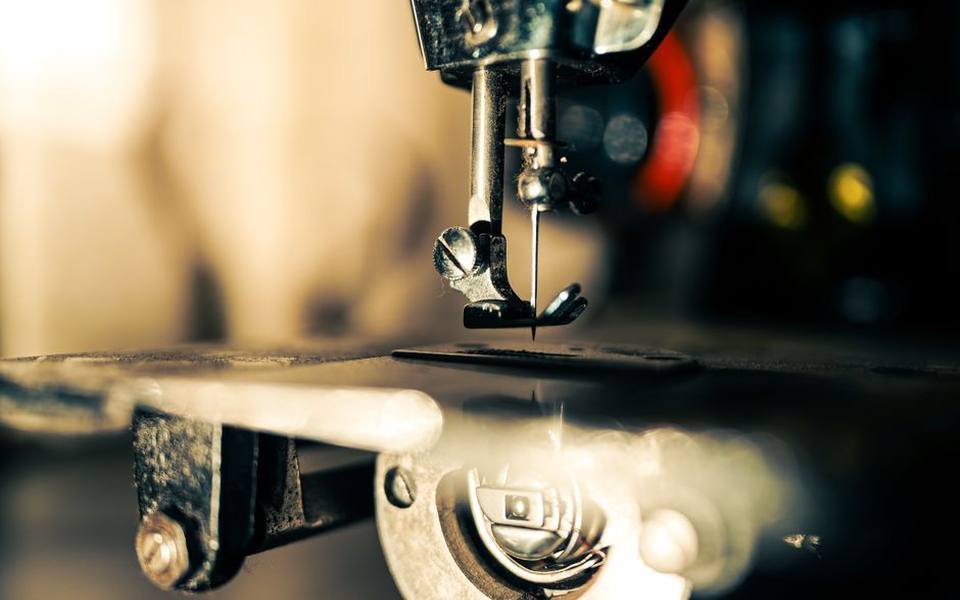
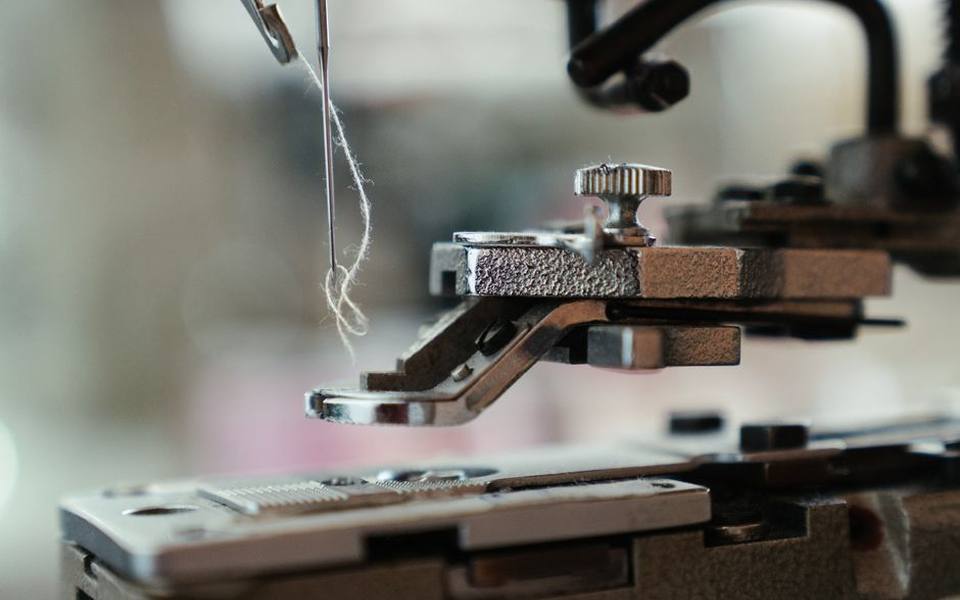
The needle of a sewing machine relies on two vital indentations along its blade to manage thread movement. Running down the front is a deep groove that cradles the strand as it punches through dense layers, shielding it from friction. On the reverse side, just above the eye, sits a cutout called the scarf. When the needle rises slightly from its lowest position, the scarf provides enough clearance for the hook tip to snatch the slack upper loop without grazing the metal shaft.
The eye and point finish the design, dictating which materials the tool can penetrate without tearing. The eye must be smooth and sized appropriately so thread slides without catching on microscopic metal burrs. A slightly bent shaft or dull tip alters the timing between scarf and hook by mere fractions of a millimeter, causing skipped stitches or loud clicking sounds beneath the throat plate.
Selecting the Right Point Style for Wovens, Knits, and Heavy Materials
Point styles dictate how a sewing needle enters weave structures. Universal needles possess a slightly rounded point that handles basic wovens and sturdy synthetic blends reasonably well, making them popular utility tools for everyday mending. However, specialized fabrics require dedicated tips. For crisp, tight weaves like batik, microfiber, and dense silk, a sharp Microtex needle cuts cleanly through the threads without pushing them out of alignment or leaving runs in the weave.
Knit fabrics, jersey, and spandex stretch substantially and will ladder if an ordinary sharp point pierces their interlooped yarns. Ballpoint and stretch needles solve this problem by gently sliding between fibers rather than cutting them. Stretch needles feature a modified scarf and deeper eye groove that compensate for elastic fabrics climbing upward during needle ascent, preventing irritating skipped stitches along flexible hems.
Heavy textiles require reinforced points and thick shafts that resist deflection. Denim and jeans needles feature an acute, slender point combined with a stiffened blade to penetrate dense twills without deflecting into the metal plate. Leather needles employ specialized cutting blades—such as spear, wedge, or diamond profiles—to slice neat holes through genuine hide, though they should never be used on synthetic faux leather or woven fabrics.
Singer Sewing Machine Needles and System Compatibility
Domestic Singer sewing needles use the standard flat-shank domestic format, making them compatible with almost all household mechanical and computerized machines made in recent decades. Modern Singer machine needles commonly carry style numbers like 2020 for regular wovens or 2045 for knits and ballpoint applications. While older vintage models occasionally used specialized proprietary needles, modern consumer units accept standard home sewing needles interchangeably with other major accessory brands.
Many Singer sewing machine needles feature colored bands painted on the shoulder to identify needle type and size at a glance. For instance, color coding helps you distinguish an 80/12 universal needle from a 90/14 denim needle inside a crowded notions tin. Checking the markings stamped into the flat of the shank provides the definitive metric size if the colored enamel wears off after long hours of continuous work.
Replacing dull blades on your machine regularly maintains smooth motor performance and clean tension. Singer needles generally last through six to eight hours of active run time before micro-burrs develop on the tip. Local shops listed under sewing machine sales and service can provide replacement multi-packs matched to your model, along with advice on older vintage Singer models requiring specific historic shanks.
Choosing Needles for Brother Sewing Machines
A home sewing needle for Brother sewing machine models follows the identical universal domestic standard 130/705 H system found across modern domestic crafting gear. Brother machines, known for their user-friendly drop-in bobbin assemblies and automated threaders, rely on straight, sharp needles to maintain delicate alignment. Using bent or off-brand low-tolerance needles can strike the plastic bobbin case rim, leaving gouges that snag thread loops continuously.
Computerized Brother machines frequently support specialty tasks like free-motion monogramming and computerized hoop embroidery. For these projects, an embroidery needle with an oversized, polished eye and a light ballpoint reduces thread shredding during high-speed, multi-directional stitching. When working on delicate items like table runners or lace, pairing the right needle with fine stabilizer prevents fabric tunneling and distortion.
If you regularly sew garments or perform complex clothing alterations, keep assorted Brother-compatible stretch, jeans, and twin needles in your kit. Twin needles allow you to finish T-shirt hems with two parallel rows of topstitching on top while the single lower bobbin creates an expandable zigzag underneath. Always verify the stitch plate opening width on your Brother machine before engaging wide decorative or twin needle patterns.
Hand Sewing Needles and Specialty Darner Needles
Working away from the machine requires a completely different selection of tools. Every needle for hand sewing features an eye directly at the end of the shaft rather than near the tip. Hand needles vary drastically in blade length, eye shape, and flexibility depending on the task. Common sharps work well for everyday hand stitching, while shorter betweens provide quilters with the stiffness and leverage needed to produce tiny, uniform running stitches through dense batting.
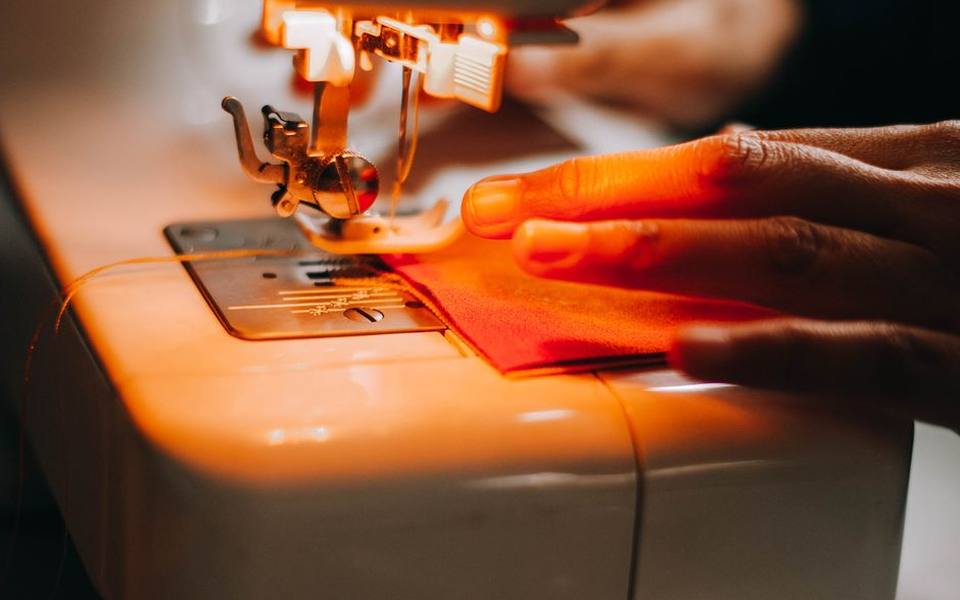
When repairing socks, woolen knitwear, or coarse household linens, specialized darner needles become indispensable. Long darner needles feature elongated shafts and blunt or semi-sharp points that let you weave threads across open holes without snagging adjacent knit loops. Cotton darners are slightly thinner for mending delicate garments, whereas yarn darners handle heavier wool cords without crimping or twisting the fibers.
Selecting the right gauge depends entirely on your working material. Thick needles punch permanent entry holes into fine weaves, while overly flexible needles bend under the tension of heavy hand sewing thread. Exploring basic techniques in structured classes or workshops helps beginner crafters understand how subtle differences in needle diameter and length reduce hand fatigue during extended hand-binding or applique work.
How Needle Threaders Save Time and Eliminate Eye Strain
Threading an eye manually can challenge even steady hands, making a dependable needle threader one of the most practical tools in your sewing room. Traditional hand threaders consist of a small coin-shaped handle holding a flexible, diamond-shaped wire loop. You push the thin wire through the needle eye, guide the cut thread through the widened wire opening, and gently withdraw the loop back through the metal eye.
Modern domestic machines frequently feature built-in semi-automatic mechanical threaders mounted directly alongside the needle bar. When you lower the lever, a microscopic metal hook rotates through the needle eye from back to front, catches the horizontal thread across its groove, and draws a small loop through as the lever releases. Because that tiny hook measures a fraction of a millimeter, forcing it into a needle smaller than size 70/10 or an improperly seated needle will bend the prong permanently.
If your machine lacks a built-in lever, standalone handheld automatic threaders offer quick, push-button operation for both machine blades and hand needles. Keep thread ends cut at a clean 45-degree angle with sharp embroidery snips rather than dull scissors. Clean thread edges prevent fiber splaying, allowing threaders and eyes to engage smoothly every time without creating bunched knots.
Bobbin Types, Shapes, and Machine Mechanics
A bobbin of sewing machine systems serves as the foundation for the bottom half of every lockstitch, holding lower thread inside the hook assembly. Although most domestic bobbins look similar to an untrained eye, using an incorrect profile is one of the leading causes of thread tangles, broken needles, and uneven tension. Even a difference of half a millimeter in height or curve prevents the bobbin from spinning smoothly inside the case.
The most prevalent style across modern domestic equipment is the Class 15 bobbin, which features flat sides and measures roughly 20.3 mm wide by 11.5 mm tall. In contrast, classic Singer machines often rely on Class 66 bobbins, which possess distinctly domed, curved rims. Newer top drop-in systems frequently specify Class 15J bobbins, which feature a very subtle curve along the rim edges that ensures proper feeding against electronic drop-in sensors.
Material construction matters just as much as dimensions. Never swap clear plastic bobbins into modern drop-in cases that specify them, and avoid substituting heavy metal bobbins into machines engineered for lightweight plastic. Metal bobbins can scratch magnetic plastic rotary cases, while lightweight plastic bobbins placed in older all-metal front-loading vertical races will bounce, spin erratically, and produce tangled nests beneath your fabric.
Matching Thread Weight to Needle Eye and Bobbin Tension
Thread thickness is categorized by weight number, where a higher number designates a finer strand. Standard construction thread is typically 50-weight or 40-weight two- or three-ply cotton or all-purpose polyester. Polyester thread offers slight elasticity and immense tensile strength, making it ideal for synthetic fabrics and stress seams. Pure cotton thread exhibits minimal stretch and presses flat with an iron, making it the premier choice for quilting and crisp heirloom tailoring.
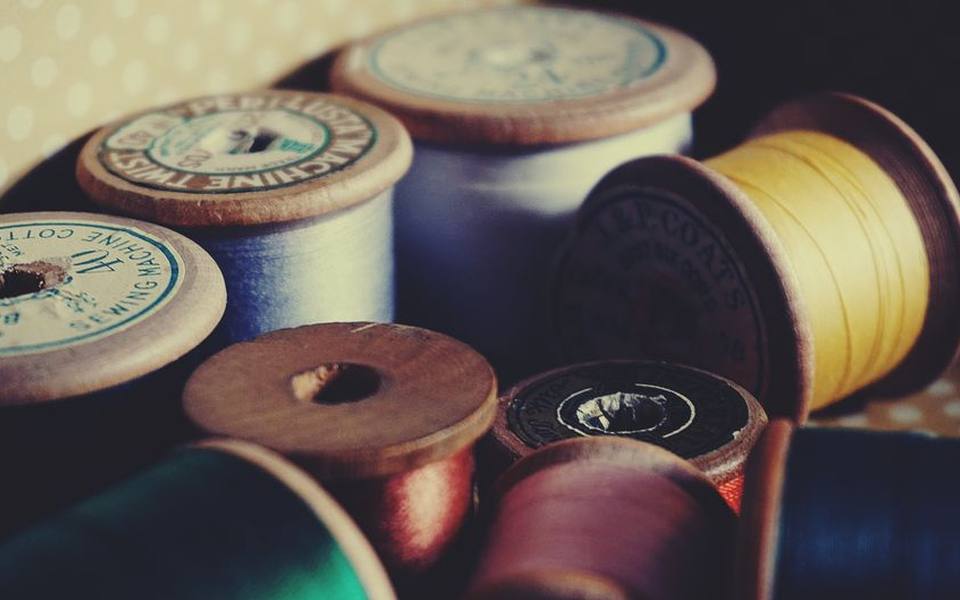
Your top thread must seat comfortably inside the needle blade groove and pass through the eye without friction. If you thread heavy 30-weight topstitching thread through an 80/12 universal needle, the strand will bunch against the cloth surface, skip stitches, and produce loose loops on the bottom side of the seam. For specialized decorative designs, professional machine embroidery work typically utilizes slick 40-weight rayon or polyester thread matched with an eye engineered to withstand rapid, multidirectional shifts.
Bobbin thread should balance the upper line without adding unwanted bulk to the underside of the seam. While everyday garment sewing generally uses matching spools in both top and bobbin positions, machine embroidery and delicate edge hems benefit from extra-fine 60-weight bobbin filament. Lighter bobbin thread ensures lower bulk along fine seams, allowing the bobbin case tension spring to regulate smooth feed rates without constant manual screw adjustments.
Diagnosing Skipped Stitches, Thread Breaks, and Jammed Bobbins
When stitch troubles begin, systematic troubleshooting quickly pinpoints the culprit. The vast majority of stitching faults stem from three simple mistakes: an unseated needle, a dull point, or incorrect upper thread pathing. Always begin by completely unthreading the machine, pulling the needle, and inserting a brand-new needle pushed all the way up into the clamp before tightening the thumbscrew firmly.
A bent needle frequently strikes the throat plate or bobbin hook, producing intermittent metallic clicks followed by sharp thread breakage. You can check for straightness by placing the needle flat side down on a piece of glass; if the tip curves upward or rocks unevenly, discard it immediately. Check your bobbin case as well; plastic cases that have sustained a needle strike develop rough plastic burrs that snag lower thread loops, creating instant thread jams under the feed dogs.
If you consistently experience tight lower tension or broken upper threads despite replacing needles and rewinding bobbins evenly, your timing or hook clearance may require professional adjustment. Qualified technicians at an established sewing machine service and repair center can polish rough hook points, reset needle bar heights, and restore internal bobbin tension springs to factory specifications.
Published 2026-09-25 · reviewed with each rebuild, last September 2026.
Find quilt & fabric shops near you
The directory lists 33,981 quilt & fabric shops by state and city — pick your state or use the “Near me” button in the header.
More guides
-
 Buying
Where to Buy Fabric: Sourcing Alternatives Online and Locally
-
 Service
DIY Zipper Repair and Simple Clothing Alterations Guide
-
 Buying
Beginner Embroidery Kits and Thread Selection: What to Know Before You Stitch
-
 Buying
Where to Buy Yarn for Knitting and Crochet: Sourcing Guide
-
 Buying
Beginner's Guide to Quilting and Essential Sewing Supplies
-
 Buying
Essential Guide to Sewing and Quilting Notions
-
 Owning
How to Make a DIY T-Shirt Quilt: Step-by-Step Guide
-
 Buying
Choosing Beginner Sewing Machines: Janome Models and Maintenance Costs
-
 Buying
Jelly Rolls and Precut Fabrics: Sizes, Quilt Patterns, and Buying Guide
-
 Buying
Cross Stitch and Embroidery Supplies: Aida Cloth, Floss, Kits, and Patterns
-
 Buying
Fabric Selection Guide: Cotton, Linen, Velvet, Fleece, and Synthetic Blends
-
 Buying
Quilting Patterns, Blocks, and Techniques: From Log Cabin to Paper Piecing
-
 Service
Complete Guide to Clothing Alterations and Tailoring Services
-
 Owning
Beginner Sewing Machines: Selection, Oiling, and Repair Basics
-
 Buying
Sunbrella and Outdoor Fabrics Guide: Selection, Cushions, and Care