Understanding what sewing notions do for your craft
Sewing notions encompass all the supplementary tools, fasteners, markers, and small accessories used in stitching, piecing, and construction outside of primary fabric and the main sewing machine. From glass-head pins and seam rippers to acrylic rulers and specialized presser feet, these items dictate the precision and ease of every step in your workflow. Beginners often mistake notions for optional novelties, but the right collection drastically reduces frustration, speeds up production, and prevents fabric waste.
Understanding how notions work together prevents overspending on specialized gadgets that end up sitting idle in drawers. In quilting and garment construction, notions generally divide into measuring, cutting, marking, pinning, and pressing aids. Each category solves a specific mechanical obstacle, such as maintaining square fabric grain or stabilizing slippery seams under a needle. When selected thoughtfully, notions do not complicate your crafting space; they simplify it by making repeatable tasks predictable and accurate.
Beginners frequently discover that inconsistent seams often stem from unsuitable notions rather than a lack of manual skill. Using a dull rotary blade, an inaccurate household ruler, or a needle of the wrong thickness creates uneven tension and wavy blocks. Taking time to test different notions in local quilting classes provides hands-on experience before investing in specialized gear, allowing you to see what fits your hand size and sewing style best.
The foundational cutting and measuring tools
Accurate cutting forms the bedrock of every successful sewing project. The standard rotary cutter, typically paired with a medium or large self-healing cutting mat, allows you to slice cleanly through multiple fabric layers without shifting the weave. To use a rotary cutter efficiently, always align your ruler along the fabric grain, press down firmly with your non-dominant hand spread flat across the acrylic surface, and roll the blade forward away from your body with steady downward pressure.
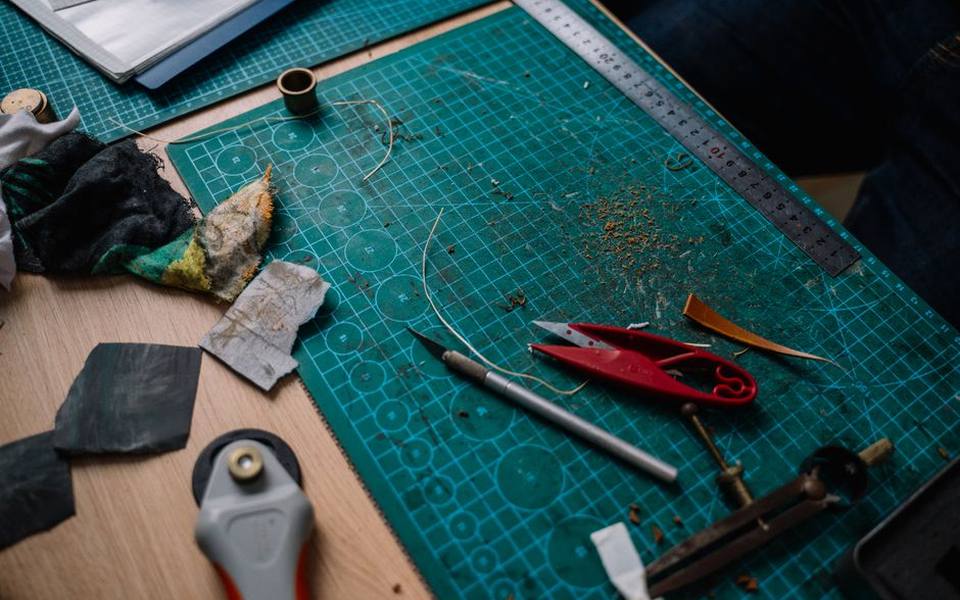
Clear acrylic rulers provide both a dependable cutting edge and a visual grid for squaring fabric blocks. Most quilters start with a 6-by-24-inch rectangular ruler for cutting strips across the width of fabric, alongside a 12.5-inch square ruler for trimming pieced blocks to size. Always cut directly against the raised edge of the ruler rather than relying on mat gridlines, as mat lines can distort slightly over long distances and cause alignment errors across wider cuts.
Accurate marking notions bridge the gap between pattern instructions and machine assembly. Washable fabric pens, tailor's chalk, and heat-erasable friction markers each have specific use cases depending on the fabric shade and whether the project will be laundered. Always test any marking implement on a spare scrap before drawing lines across your project, as certain chalk binders or chemical inks can leave permanent shadows on cottons or silks if pressed with excessive heat.
Pinning, holding, and pressing essentials
Stabilizing fabric before it reaches the feed dogs prevents mismatched seams and shifting corners. Fine glass-head pins remain the gold standard for piecing because their heads do not melt when touched by a hot iron during mid-step pressing. For thicker assemblies, such as quilt bindings or layered bag panels, spring-loaded plastic sewing clips provide strong holding power without puncturing delicate weaves or leaving permanent pinholes in vinyl, leather, or dense canvas.
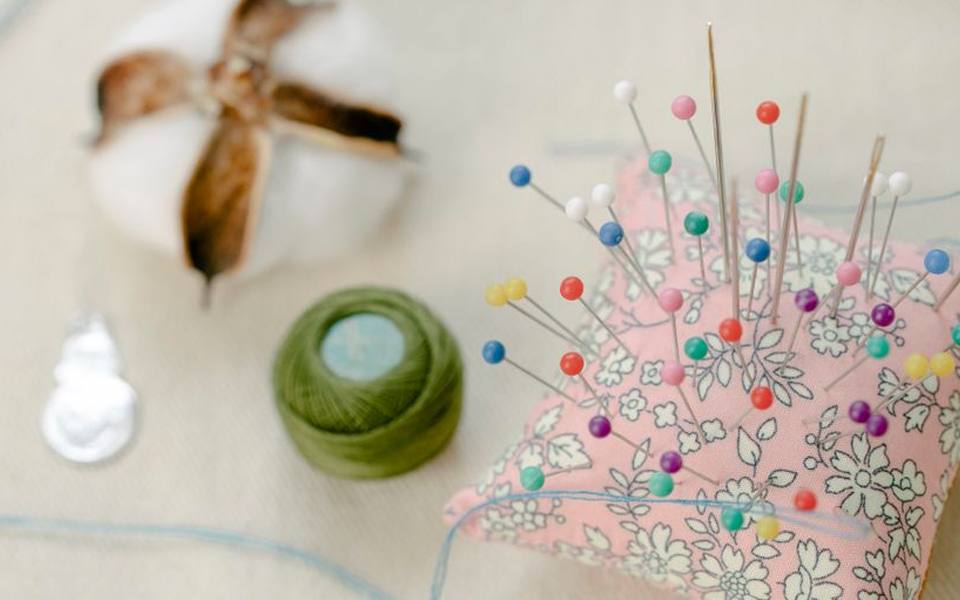
Pressing tools are just as critical as cutting instruments in producing flat, professional quilt blocks. An iron capable of delivering dry, high heat alongside a firm wool pressing mat ensures that seam allowances lay completely flat without stretching fabric on the bias. Wool naturally absorbs ambient heat and reflects it back into the underside of the seam, effectively pressing both sides of the fabric simultaneously and saving considerable time at the ironing station.
Incorporating a wooden tailor's clapper elevates pressing precision without adding chemical sizing sprays. Immediately after steam-pressing a seam or bulky junction, place the heavy hardwood clapper directly over the warm fabric until the fibers cool. The dense wood traps residual steam and absorbs heat, locking the seam into an exceptionally flat, crisp fold that standard ironing alone cannot achieve on multiple cotton layers.
Needles, presser feet, and machine accessories
Machine notions directly control how thread enters and locks into your fabric layers. Sewing machine needles are consumable items, designed to perform cleanly for roughly six to eight hours of active stitching before the tip burrs or dulls. Selecting the proper needle type—such as microtex for precision piecing, universal for general seams, or ballpoint for knit fabrics—ensures balanced tension and stops skipped stitches before they ruin your finished seams.
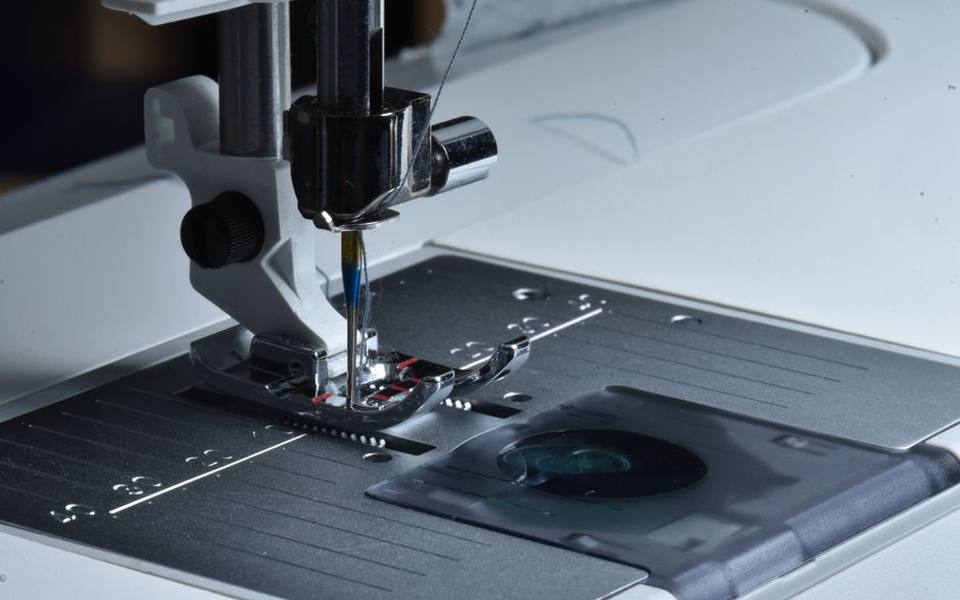
Specialty presser feet dramatically improve accuracy without requiring difficult manual maneuvering. A dedicated quarter-inch piecing foot features a precise edge profile that ensures consistent seam allowances across hundreds of quilt patches. If you find your fabric shifting or feed dogs pulling unevenly, visiting quilt shops with sewing machine sales can help you locate the exact walking foot or seam guide engineered for your machine model and feed mechanism.
When stitches drift off line, a sharp seam ripper is an indispensable safety net for every crafter. To use a seam ripper without snagging base fibers, slide the small red safety ball beneath the seam line and guide the sharp curved blade forward between fabric layers. If a bent needle strikes your throat plate while sewing heavy seams, scheduling an inspection with local sewing machine repair technicians can realign internal timing components before permanent mechanical damage occurs.
Basting and finishing tools for completed projects
Preparing a quilt sandwich—backing, batting, and pieced top—requires notions that hold wide surface areas motionless during handling. Curved safety pins allow you to scoop through all three layers easily without distorting the backing fabric against your work table. Temporary basting spray offers a faster, pin-free alternative, though it must be applied lightly in a well-ventilated space to avoid gummy needle buildup or excess adhesive transfer onto surrounding surfaces.
For large bed-sized quilts, managing basting notions on a dining table or living room floor can cause significant physical fatigue. Many quilters assemble their pieced blocks using essential home notions, then send the basted or loose layers to professional longarm quilting services. These studios utilize heavy-duty rolling frames and specialized commercial notions that maintain uniform fabric tension across king and queen dimensions with ease.
Small finishing tools bring neatness and efficiency to the final stages of binding and thread trimming. Spring-action thread snips kept beside the needle plate allow rapid, flush cuts on thread tails without the clumsy weight of heavy shears. Dedicated binding clips keep double-fold binding securely wrapped around raw edges, providing clean alignment while hand-stitching the back fold or machine-stitching the front ditch.
Published 2026-09-20 · reviewed with each rebuild, last September 2026.
Find quilt & fabric shops near you
The directory lists 34,002 quilt & fabric shops by state and city — pick your state or use the “Near me” button in the header.
More guides
-
 Buying
Where to Buy Fabric: Sourcing Alternatives Online and Locally
-
 Service
DIY Zipper Repair and Simple Clothing Alterations Guide
-
 Buying
Beginner Embroidery Kits and Thread Selection: What to Know Before You Stitch
-
 Buying
Where to Buy Yarn for Knitting and Crochet: Sourcing Guide
-
 Buying
Beginner's Guide to Quilting and Essential Sewing Supplies
-
 Owning
How to Make a DIY T-Shirt Quilt: Step-by-Step Guide
-
 Buying
Choosing Beginner Sewing Machines: Janome Models and Maintenance Costs